lunes, 24 de abril de 2017

ELECTRONICS

Electronics involves the study of circuits and components that modify the intensity, direction or properties of electric currents.


ELECTRIC COMPONENTS


In this section, we will analyse the most common electronic components.


FIXED RESISTANCE OR RESISTOR


A fixed resistance or resistor opposes the flow of electric currents. Its value, which we measure in ohms, is indicated by a code of colours and numbers.


Resultado de imagen de resistor


 Imagen relacionada


VARIABLE RESISTANCE OR POTENTIOMETER


The value of a variable resistance or potentiometercan be adjusted between zero and the máximum value specified by the manufacturer.


Resultado de imagen de potentiometer symbol
Resultado de imagen de variable resistor
Resultado de imagen de variable resistor or potentiometer

ELECTROMAGNETIC CONTROL SYSTEMS

An electromagnetic control system activates the various parts of a macgine, at the right momento and for the right amount of time, ensuring that the machine functions propertly.


CAM SWITCH CONTROLLER


The device on the side of the pulley in the picture above is called a cam.


LIMIT SWITCHES

Resultado de imagen de limit switch

The picture below shows an electrical control system for a wáter tank. The battery provides power for a water tank. The battery provides power for the pump, which moves water from the lowert tank for the pump, which moves water from the lower to the upper tank. When the upper tank is full, a limit switch turns off the pump.
The switch is activated when the float rises to a certain level. When the water level goes down, the sitch returns to its original position and the pumpturns on again.

There are two types of limit switch: N/C (Normaly Closed)        N/O (Normaly Opened)


miércoles, 19 de abril de 2017

ELECTROMAGNETIC MECHANISMS


ELECROMAGNETIC GENERATORS 

DYNAMOS

A dynamo is an electrical generator that produces direct current with the use of a commutator. Dynamos were the first electrical generators capable of delivering power for industry, and the foundation upon which many other later electric-power conversion devices were based, including the electric motor, the alternating-current alternator, and the rotary converter. Today, the simpler alternator dominates large scale power generation, for efficiency, reliability and cost reasons. A dynamo has the disadvantages of a mechanical commutator. Also, converting alternating to direct current using power rectification devices (vacuum tube or more recently solid state) is effective and usually economical.

Resultado de imagen de magnetic flux generator

ALTERNATORS

An alternator is an electrical generator that converts mechanical energy to electrical energy in the form of alternating current.[2] For reasons of cost and simplicity, most alternators use a rotating magnetic field with a stationary armature.[3] Occasionally, a linear alternator or a rotating armature with a stationary magnetic field is used. In principle, any AC electrical generator can be called an alternator, but usually the term refers to small rotating machines driven by automotive and other internal combustion engines. An alternator that uses a permanent magnet for its magnetic field is called a magneto. Alternators in power stations driven by steam turbines are called turbo-alternators. Large 50 or 60 Hz three phase alternators in power plants generate most of the world's electric power, which is distributed by electric power grids.[4]

Resultado de imagen de electromagnetic alternator


ELECTRIC MOTORS


An electric motor is an electrical machine that converts electrical energy into mechanical energy. The reverse of this is the conversion of mechanical energy into electrical energy and is done by an electric generator.

In normal motoring mode, most electric motors operate through the interaction between an electric motor's magnetic field and winding currents to generate force within the motor. In certain applications, such as in the transportation industry with traction motors, electric motors can operate in both motoring and generating or braking modes to also produce electrical energy from mechanical energy.

Resultado de imagen de electric motors

RELAYS

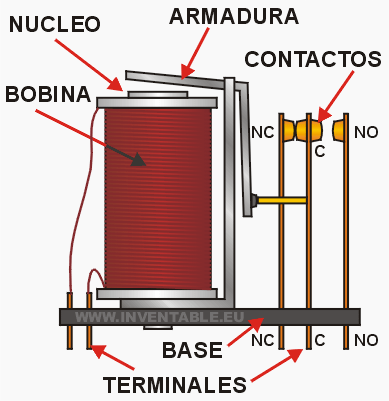
A relay is an electrically operated switch. Many relays use an electromagnet to mechanically operate a switch, but other operating principles are also used, such as solid-state relays. Relays are used where it is necessary to control a circuit by a separate low-power signal, or where several circuits must be controlled by one signal. The first relays were used in long distance telegraph circuits as amplifiers: they repeated the signal coming in from one circuit and re-transmitted it on another circuit. Relays were used extensively in telephone exchanges and early computers to perform logical operations.

Resultado de imagen de rele

martes, 18 de abril de 2017

EFFECTS OF ELECTRIC CURRENT 2


ELECTROMAGNETIC EFFECTS


In thisexperiment, the electric circuit has created a magnetic field. This effect can be used to produce movement, for example in electric motors, relays and other devices.


The scientist Michael Faraday discovered the opposite effect. He noticed that electricity could be generated by using a magnet and an electrical conductor. This principle allows us to build dynamos and alternators.


SOUND


We can transform electric current into sound by using electromechanical devices, such as bells and buzzers. Some of these devices are based on the piezoelectric effect, or the ability of some materials to change shape when electricity is applied to them.


Resultado de imagen de sound

EFFECTS OF ELECTRIC CURRENT

The movement of electrons though conductive materials produces effects that have useful applications.


HEAT


The energy that produces as heat is called the Joule Effect. It is expressed by the following formula:


E=I2 x R x t


Imagen relacionada


LIGHT


There are various ways that electricity can be used to produce light.


Imagen relacionada


INCANDESCENT BULBS


When wan electric current passes through the metalic filament of a light bulb, it produce light. This phenomenon is called incandescence.


Resultado de imagen de INCANDESCENT BULBS


FLUORESCENT TUBES

A fluorescent tube is a low pressure mercury-vapor gas-discharge lamp that uses fluorescence to produce visible light. An electric current in the gas excites mercury vapor which produces short-wave ultraviolet light that then causes a phosphor coating on the inside of the lamp to glow. A fluorescent lamp converts electrical energy into useful light much more efficiently than incandescent lamps.


Resultado de imagen de fluorescent tubes definition


LIGHT-EMITTING DIODES (LED)


A light-emitting diode (LED) has layers of semiconductor materials. The n-type layer has extra electrons with negativelycharged particles. In contrast, the p-type layer has holes where there aren´t enough electrons. When electricity is applied to the LED, the electrons and holes cross over into the active layer, where they combine and produce photons, or particles of light.


Resultado de imagen de LIGHT-EMITTING DIODES (LED)


TYPES OF CURRENT

DIRECT CURRENT

DC (direct current) is the unidirectional flow or movement of electric charge carriers (which are usually electrons). The intensity of the current can vary with time, but the general direction of movement stays the same at all times. As an adjective, the term DC is used in reference to voltage whose polarity never reverses.

ALTERNATING CURRENT

In electricity, alternating current (AC) occurs when charge carriers in a conductor or semiconductor periodically reverse their direction of movement. Household utility current in most countries is AC with a frequency of 60 hertz (60 complete cycles per second), although in some countries it is 50 Hz. The radio-frequency (RF) current in antennas and transmission lines is another example of AC.

The variation of any electrical parameter over a period of time (in this case the electric current) is an electric signal.

The tension or voltage of domestic electricity is an alternating signal because it alternates between possitive and negative values. Its waveform is also sinusoidal, with a smooth, regular shape.
Resultado de imagen de AC waveform alternating an direct current


THE EFFICIENCY OF ALTERNATING CURRENT

The average power of alternating current is equal to the direct current that is needed to produce the same effect. In the case of an alternating sinusoidal current, the aveerage power would be as follows;

Vef=Vmax/√2

TRANSFORMERS

There i an important different between alternating and direct current. Alterning current  can be increased or decreased by a transformer.
Transformes consist of to windings made of copper wire. If we apply an alternating current to one of them (V1), it will produce a certain voltage in the other (V2). The value will depend on the number of times that the copper wire has been wrapped around each winding, represented as "n1" and "n2":

V1/V2=n1/n2


lunes, 17 de abril de 2017

TYPES OF CIRCUITS

SERIES CIRCUIT


Two or more elements form a series circuit when the output of one element provides the input for the next element.


In the following diagram, the same current flows through all the elements, and the total voltage  is the sum of the sum of the tensions at the end of each element.


To calculate the total resistance of a circuit, we add the resistance values of each load:


R=R1+R2+R3+...


PARALLEL CIRCUIT


The equivalent resistance of  this type of circuit would be:


1/R=1/R1+1/R2+1R3+...

If identical batteries are connected in parallel the voltage of the circuit will not increase.      


COMBINATION CIRCUIT


A combination circuit has some elements connected in series and other elements in parallel.                                                              

miércoles, 5 de abril de 2017

ELECTRICAL QUANTITIES

VOLTAGE OR POTENTIAL DIFFERENCE

 The amount of energy that a generator (electrochemical cell or battery) can transfer to electrons depends on its voltage (V) or electric tension. This is measured in volts (v).

If we want to measure voltage, we can use a voltmeter. This device has two wires (probes) that must be conected in parallel.

MEASURING ELECTRIC CURRENT


Electric current (I)  is the time rate of flow of electric charge, in the direction that a positive moving charge would take and having magnitude equal to the quantity of charge per unit time: measured in amperes.


Electric current is measured in amperes or amps (A) in the InternationalSystem or SI (from the French, Le Systéme International).


1A=1C/1s


We can use an ammeter to measure electric current. This instrument is connected in series, so that all the electrons must pass through it.


ELECTRICAL RESISTANCE : OHM´S LAW


The resistance (R) is the opposition that a substance offers to the flow of electric current. The standard unit of resistance is the ohm, sometimes written out as a word, and sometimes symbolized by the uppercase Greek letter omega:Ω . When an electric current of one ampere passes through a component across which a potential difference (voltage) of one volt exists, then the resistance of that component is one ohm.


OHM´S LAW


R=V/I    -   V=R x I   -   I=V/R


ELECTRICAL ENERGY AND POWER


ELECTRICAL ENERGY


 We can calculate the energy (E) that is consumed: E=V x I x t
In the SI, this electrical energy is measured in joules (J).


ELECTRICAL POWER


The electric power of load is the amount of energy that it can transform over a certain amount of time. Electric power is measured in watts (W) or kilowatts (kW).


If an electric current (I) flows at a particular tensión (V), we can calculate the power (P) that is consumed: 


P=V x I

AN ELECTRIC CIRCUIT

An electric circuit  is a pathway for the flow of electrons.
Electric current is a continuous flow of electrons through a circuit.

PARTS OF AN ELECTRIC CIRCUIT

It consist in various parts:
-Generators provide the energy that electrons neeed in order to move.
-Loads are devices that transform electrical energy into other types of energy that we can use.
-Control elements are used to direct and interrupt the flow of electric current.

DIAGRAMS AND SYMBOLS

ELECTRONIC CIRCUITS AND ELECTRONICS

You will learn to...
-Identify basic eletricaland electronic components and their symbols.
-Use basic instruments and units of measurement.
-Design and build simple electric and electronic circuits.
-Draw circuit diagrams using the correct symbols.
-Explain various effects of electric current and how it is converted.
-Design and build a model car that is powered and controlled by electrical devices.

viernes, 17 de marzo de 2017

Before you begin...

Before you begin...ANSWER.
1.What is the difference between a form of energy and an energy source?
2. Can you name an energy source? Coul, petroleum, uranio, sun, wind...
3. What is a renewable energy source?
4. Where do oil, gas and coal come from? They come from natural resource.
5. What types of power stations do you know? Electrical, nuclear power station.
6. How is electricity transported from a power station to tour home?
7. What do the terms "greenhouse effect" and "acid rain" mean? How are they related to energy production?
8. What other points could you add to your poster or leaflet? Environmental consequences and the energy saving.

Resultado de imagen de ?

ENVIRMENTAL IMPACT

Environmental impact

Power stations use products that affect the environment, or example hey require the construction of new buildings and other infrastructure.

ENVIRONMENTAL IMPACT ASSESSMENT.

Any proposed new technological project include an environmental impact assessment that are all of the ecological changes that the project could cause in the local área and there also be in the economical and social repercussions of the project.

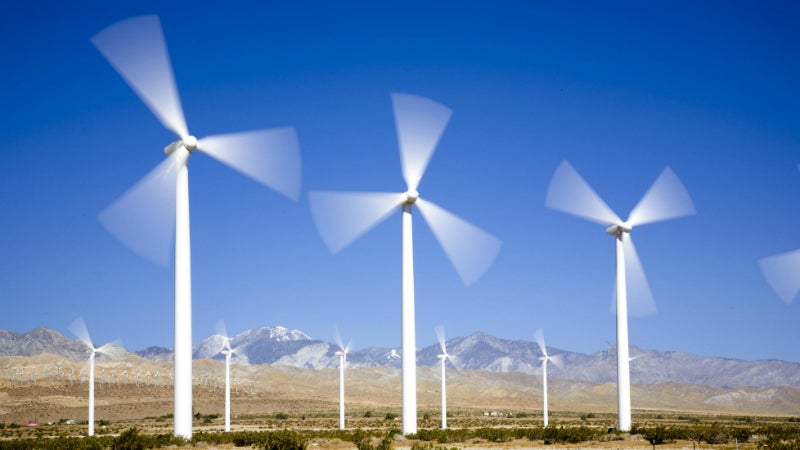
-Wind: It use renewable energy. It has visual and acoustic impacts and the output is low ,strong winds can cause accidents. However, wind farms are clean and help to replace our dependency on fossil fuels.


Resultado de imagen de wind


-Hydroelectric: It use renewable energy. It changes the flow of rivers and floods large áreas.
Hydroelectric power stations could generate disasters and dangers to plants and animals. Their output is efficient and high.


Resultado de imagen de hydroelectric


-Solar: It use renewable energy. These power stations take up a lot of land and installations are expensive. There are risks of burns and blindness, and their output is low. However it's clean and helps to replace our dependency on fossil fuels.


Imagen relacionada

-Marine: It use renewable energy. The construcction of these power stations are expensive and affects the environment and the output is low. They are clean and help to replace our dependancy on fossil fuels.
Resultado de imagen de marine energy

-Biomass: It use renewable energy. Their technology is beneficial when it is used properly but it requires an excessive of natural resources. They replace our dependancy on fossil fuels and waste products that go to landfill sites.


Resultado de imagen de biomass energy for kids

-Fossil fuels: It use non-renewable energy. These power stations affects the air and the wáter and damage the environment. The pollution of the air causes respiratory ilnesses. Their output is high and efficient.

Resultado de imagen de fossil fuels

-Nuclear: It use non-renewable energy. They produce radioactive waste and accidents. The waste products are not reciclable. Their output is high and efficient.


Resultado de imagen de energía nuclear los simpson

jueves, 16 de marzo de 2017

Electric power stations that use non-renewable energy sources

Electric power stations that use non-renewable energy sources

There are two types: thermal power stations and nuclear power stations.

THERMAL POWER STATIONS THAT USE FOSSIL FUELS.

This type of power stations use fossil fuels for generate thermal energy, for after convert the thermal energy into mechanical energy.


Resultado de imagen de THERMAL POWER STATIONS THAT USE FOSSIL FUELS.

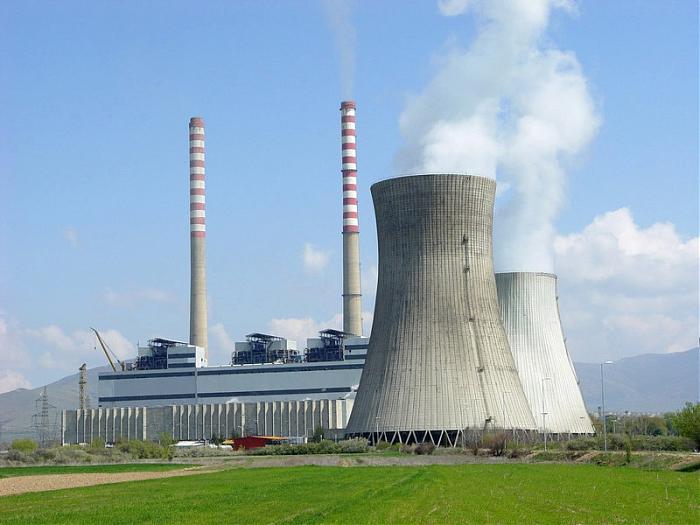
Thermal power stations works with coal, oil and natural gas that heat wáter in a boiler. In the boiler turns aturbine connected to the rotor of a generator. The energy produced by the generator is transported by a network of high voltage power lines. The steam goes to a condenser, where it cools and becomes liquid wáter. Finally, the water is pumped back to the boiler.

Combined-cycle power stations.

In cogeneration power stations, electricity is generated in two systems. The first, burns natural gas with compressed air, and then it produces superheated gases, which turn a turbine to generate electricity.
The second uses the previous hot gases and uses them to produce steam in a heat recover boiler. Finally the steam turns a turbine to generate more electricity. This are the reasons because of combined-cycle stations are more efficient that the single.

Resultado de imagen de Combined-cycle power stations.

NUCLEAR POWER STATIONSSS.

This type of power stations use nuclear reactors, that uses radioactive material (specially isotopes of uranium), to produce heat.


Nuclear power stations produce a lot of energy that we can sold at a profit, but, in these power stations happens many accidents and storage of radioactive waste.


Imagen relacionada

ELECTRICAL ENERGY

Electrical energy

It is a form of energy that is transported by an electrical current. Electricity is the most useful in the world for two reasons:

-It can be transformed into other types of energy so better than others.
-It can be transported over long distances cheapest and more efficient.

ELECTRIC POWER STATIONS.
A power station is a place when energy from natural resources is transfromed in the energy that we may use. Depends of the energy we will generate , recives a name or another.
How the electricity is generated?

If we want transform the energy into electricity, we usegenerators and if generators are used in power stations ,are called alternators. An alternator is make up by a stator and a rotor. The rotor has an even numbers of coils that receive direct current. They produce an electromagnetic field . Aturbine turns the axis of the rotor and generate electric current. This system is used at all power stations except for photovoltaic stations.

Resultado de imagen de ELECTRIC POWER STATIONS.


THE TRANSPORTATION AND DISTRIBUTION OF ELECTRICITY.

Power stations, usually, are place in zones far than the áreas where we use the electricity for safety reasons, for need space or for geographical features.
Electrical energy cannot be stored. There re many steps in the progress of transportation of energy:

1 Raising the voltage: the voltage is raised ,by transformers to high voltajes, because the electricity must go over large distances.

2 High voltage lines: the routes that the towers where are intalled the lines are carefully planned.

3
Reducing the voltage: The substations ,which are installed between the high voltage lines and final consumers, use Transformers to reduce the power to lower voltages.

4 Finally the power is distributed to buildings, industries and public installations. Te electric lines are installed in posts or underground. The voltage is reduced, depending on the final cosumer.

Resultado de imagen de THE TRANSPORTATION AND DISTRIBUTION OF ELECTRICITY.

ENERGY SOURCES

Energy sources

Energy sources are natural resources that we can use for generate different forms of energy and we
can transform that energy for various purposes. We can classify into two general categories:

NON-RENEWABLE ENERGY SOURCES.

They come from natural resources that are limite and can be exhausted, and it would take million
years to regenerate. They are the most commonly used energy sources. They include fossil fuels and
nuclear energy, which uses radioactive materials, such as uranium.

Resultado de imagen de non renewable energy

RENEWABLE ENERGY SOURCES.

They come from natural resources that we cannot use up completely. They include hydroelectric, solar, marine,
geotermal and biomass resources, as well as energy that we can produce from solid urban waste.


Resultado de imagen de renewable energy sources

ENERGY TRANSFORMATIONS

ENERGY TRANSFORMATIONS

Everyday, we produce transformations of energy. When energy is transfomed, it may produce some unwanted forms of energy. The following examples show how:

When we rub our hands , we transformed the chemical energy in our muscles into kinetic energy, and after, the kinetic energy can be transformed into thermal energy.

The chemical energy in the fireworks is converted into light, heat , sound and mechanical energy when it explode.

The nuclear energy in stars is transformed into very intense luminous and thermal energy.

Resultado de imagen de energy transformations

ENERGY

ENERGY
It´s the capacity of a body to perform transformations and do work It is measured in joules (J) and if it takes the form of heat, is measured in calories (cal).

Resultado de imagen de energy